
Check the car you’re looking at
Enter the VIN to decode it for free, with its open recalls. Then pick the reports you want, if any.
Letters and numbers, no I, O or Q. It decodes as soon as all 17 are in.
Try it with
Key takeaways
- Anyone can register as a Copart member with a government photo ID, but some vehicles can only be bought by members with a business or dealer license on file.
- Whether you need a license depends on the vehicle and the state rules that apply to it, so check each lot before you bid, not just your membership.
- If a car you want needs a license you don’t have, you can buy it through a Copart Registered Broker, which bids for you and charges its own fee.
- The buyer is responsible for knowing what a vehicle requires. Read the lot’s sale document (title type) and the state’s rules for rebuilding or registering it.
- Before you bid, run the VIN: the lot photos, an auction history report and the title records tell you more than the listing.
On this page
The short answer
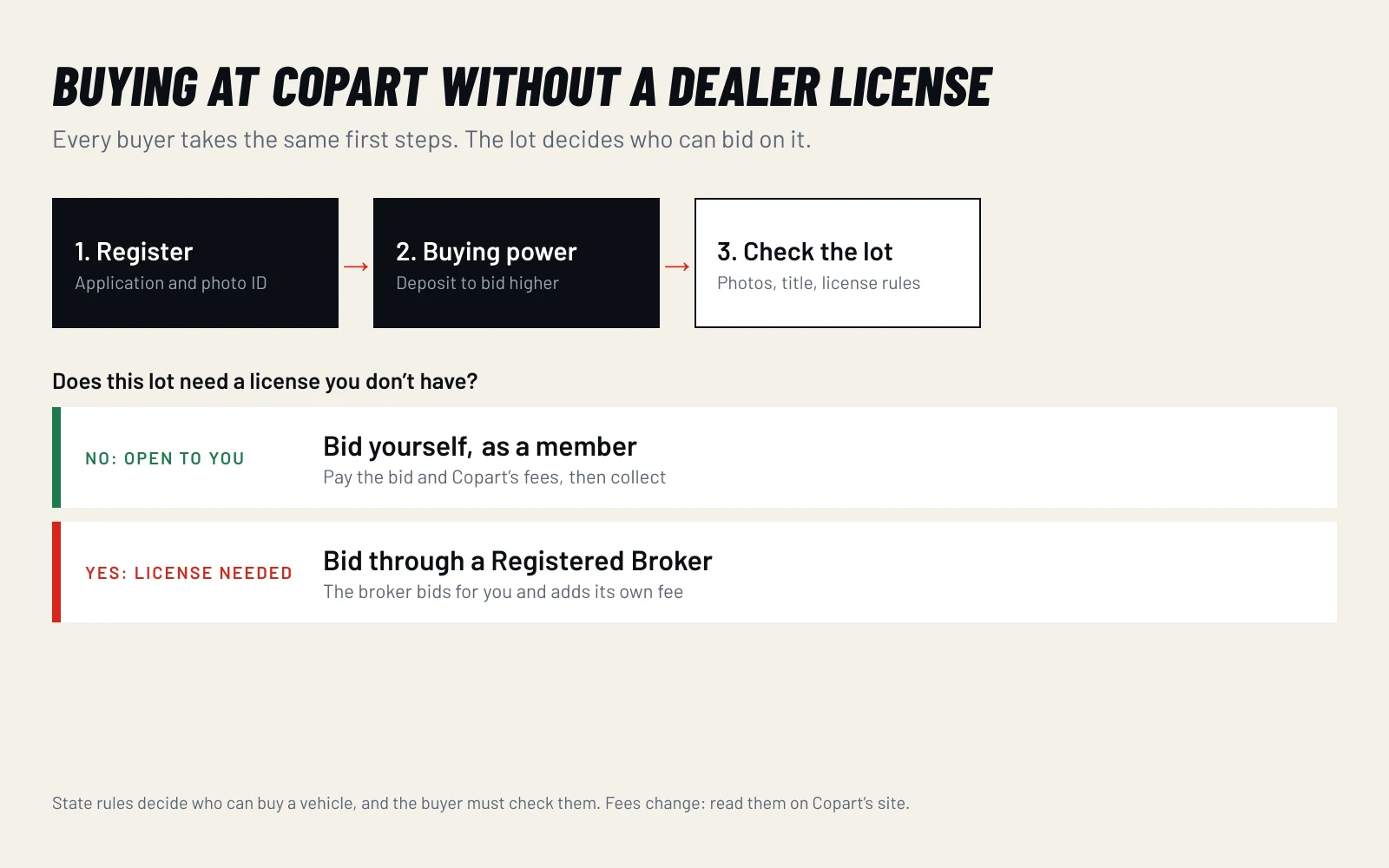
Copart’s own documents describe two ways in. A person or a business opens a membership with a basic application and shows government photo ID before buying; businesses also supply their business licenses. Members of the public who don’t qualify to buy a given vehicle themselves can buy it through a Registered Broker, a licensed business that bids in its own name for you.
So the question isn’t really “can I buy from Copart?” but “can I buy this car?” Some vehicles are open to any member; others are limited to members with the right license, because state rules control who can buy them.
How buying at Copart works
- Register as a member. Fill in the application and provide a valid ID (a driver’s license, state ID or passport). Business buyers add their licenses or certificates.
- Fund your buying power. Copart asks for a deposit to bid above a set amount. The levels and fees change, so read them on Copart’s site when you sign up.
- Find the car and check the lot. Read the photos, the damage notes, the sale document and any license requirement before bidding.
- Bid. Online, in a live auction or with a preliminary bid before the sale.
- Pay and collect. Pay the bid plus Copart’s fees within the deadline, then arrange pickup or transport before storage fees start.
Which cars need a dealer license?
State rules decide who can buy a given vehicle, and Copart’s member terms make the buyer responsible for finding out what the vehicle they buy requires. In practice, what matters is:
- The state the car is sold in. Each state sets its own rules for auction buyers.
- The sale document. A clean title, a salvage title, a certificate of destruction or a parts-only document are not open to the same buyers, and some can never be registered for the road again.
- The lot itself. Read the lot’s details for any license requirement before you bid. If it isn’t clear, ask Copart before bidding, not after winning.
Buying through a Registered Broker
A Registered Broker is a business with the licenses the vehicle requires, which bids on your behalf. Copart describes brokers as the route for members of the public, and each broker sets its own fees and terms.
| Your own membership | Through a Registered Broker | |
|---|---|---|
| Who bids | You, in your name | The broker, for you |
| Vehicles you can buy | Those open to members without a license | Also those that need the broker’s license |
| Extra costs | Copart’s fees | Copart’s fees plus the broker’s fee |
| Good for | Clean-title or unrestricted lots | Licensed-only lots, or buying from abroad |
Buying from outside the US usually goes through a broker as well, and the car then needs export and import paperwork. Our guides to importing a US car cover the rules for each destination country.
Check the car before you bid
Auction cars are sold as they are, and most are sold because something happened to them. You can’t take one for a test drive, so the VIN does the talking:
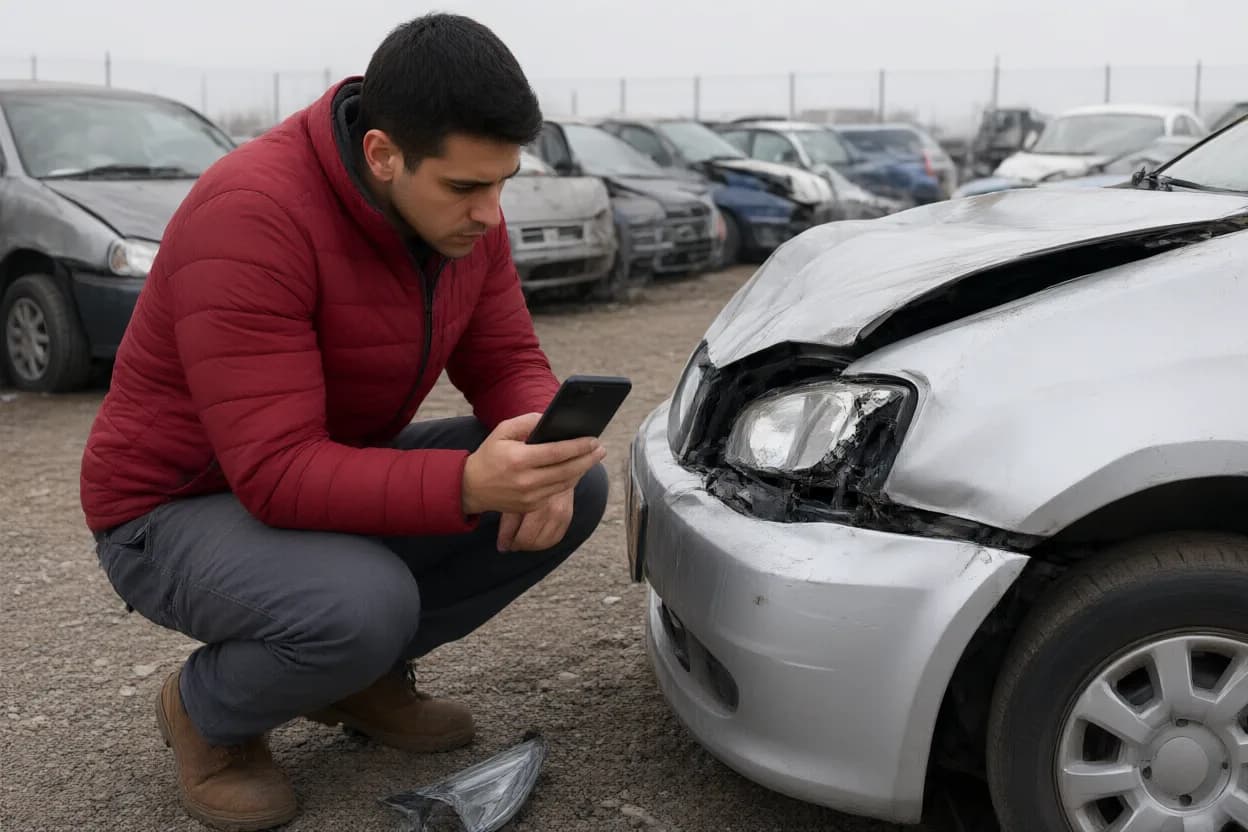
- The lot photos and damage notes. Treat the photos as the most useful part; the damage codes reflect only known or reported damage.
- An auction history report. If the car was sold at auction before, the Copart VIN report keeps the earlier photos and details, even after the listing is gone.
- Title records. NMVTIS title records show brands such as salvage or junk; NICB VINCheck shows theft and total-loss records from participating insurers, for free.
- The car’s life before the auction. A CARFAX or AutoCheck report shows accidents, owners and odometer readings from before the sale.
An auction report here costs $7.99 and shows the lot photos, the damage recorded at the sale, the title type and the odometer reading.
What a salvage car costs after you win
The winning bid is only the start. Before you bid, add up what comes after, using the current figures on Copart’s site and your broker’s terms:
- Copart’s buyer fees, which depend on the price and how you pay; see our auction fees explained.
- The broker’s fee, if you use one.
- Storage fees if the car isn’t collected in time, and transport or shipping.
- Parts and repair, then any state inspection a rebuilt car must pass before it can be registered.
- For a salvage car, the effect of the brand on insurance and resale; see salvage title check.
A checklist before you place a bid
- Confirm you’re allowed to buy this lot, or line up a Registered Broker.
- Read the sale document: can this car be registered for the road again in the state where it’ll be driven?
- Study every photo, and run the VIN for its auction history and title records.
- Set a ceiling that includes fees, transport, repair and inspection, not just the bid.
- If you can, send someone to look at the car in the yard before the sale.
Questions
Can I buy from Copart without a dealer license?
Yes, for vehicles open to members without a license. For the others, you can buy through a Copart Registered Broker, who bids for you and charges a fee.
Do I need a license for every car on Copart?
No. It depends on the vehicle and the state rules that apply to it. Check each lot before you bid.
What do I need to register with Copart?
A completed application and a valid government photo ID, such as a driver’s license, state ID or passport. Business buyers also provide their licenses.
What is a Copart Registered Broker?
A licensed business that buys on your behalf, so you can bid on vehicles your own membership can’t buy. Each broker sets its own fees and terms.
Can I buy from Copart from outside the US?
Many buyers abroad do, usually through a broker, then ship and import the car. Check your country’s import rules before you bid.
Does a Premier membership remove the license requirement?
No. A higher membership raises how much you can bid; it doesn’t change which vehicles state rules let you buy.
How do I check a Copart car’s history?
Run the VIN: an auction history report for earlier sales and photos, title records for brands, and CARFAX or AutoCheck for its life before the auction.
Was this helpful?

About the author
Tayron Bram
Data Validation Officer
Tayron Bram is the Data Validation Officer at Smart VIN Check, with 41 years of experience in used-car sales, auto auctions and vehicle data. Tayron has checked thousands of vehicle history reports and worked with dealers importing cars from the US. At Smart VIN Check, Tayron checks that every fact in our guides matches its source, from state title rules to NMVTIS and NHTSA records, and goes back to those sources when they change. Before a guide is published, Tayron reads it the way a buyer would, looking for anything unclear, out of date or not backed by a source. Tayron also keeps the prices we quote from other sellers current, so the comparisons on our pages stay accurate.
More from Tayron BramRelated
Sources
- Copart annual report, fiscal 2021: how members and the public buy (copart.com)checked October 2026
- Member terms and conditions of a Copart Registered Broker (hosted on copart.com)checked October 2026
- NMVTIS consumer access (U.S. Department of Justice)checked October 2026
- NICB VINCheck (National Insurance Crime Bureau)checked October 2026